
The Exiled Officer Preserves His Light
I ChingThis flow follows an able public servant through repression, withdrawal, survival, and the defeat of a corrupt ruler.
increasing Bearing strength in each event
 decreasing
Bearing strength in each eventdecreasingIntelligence Is Wounded
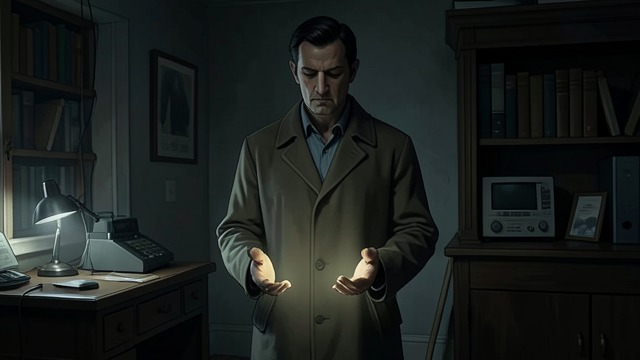
A Good Officer in a Bad Court
The light under pressure
Legge interprets Darkening of the Light as an intelligent minister serving under a weak and unsympathetic sovereign. His capacity is real, but the political environment suppresses it.
The conflict is between good judgment and power that cannot bear to be corrected.
A demand for caution
The opening judgment recommends recognizing the difficulty and maintaining correctness. The officer must not confuse courage with exposure to needless destruction.
The figure begins with an ethical problem: how to preserve service when public action is dangerous.
Withdrawal Costs the Officer
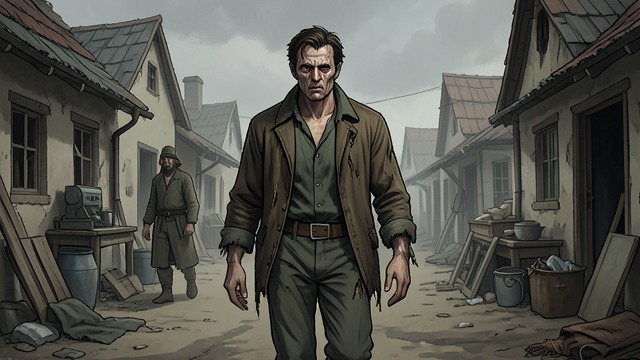
The Price of Leaving
A wounded departure
The first line portrays intelligence flying with drooping wings. Legge says the superior man may withdraw so completely that he goes without food for days and faces mockery wherever he arrives.
Leaving protects the purpose but inflicts real hardship.
Integrity survives exile
The officer's reputation and comfort may suffer, yet the line does not imply that his principle has failed. His withdrawal is a choice to avoid futile service.
The personal cost makes retreat a serious moral action rather than a graceful escape.
A Wound Does Not End Service

Survival Through Constraint
Injury in the court
The second line shows the officer wounded in the left thigh. The injury impedes his movement but does not make escape impossible.
Legge reads the swift horse as the means by which he saves himself.
A preserved capacity
The officer remains oriented toward duty even while adapting to danger. He neither mistakes injury for defeat nor rushes into a fresh confrontation.
This episode keeps the possibility of future service alive.
The Courtier Enters the Dark Court
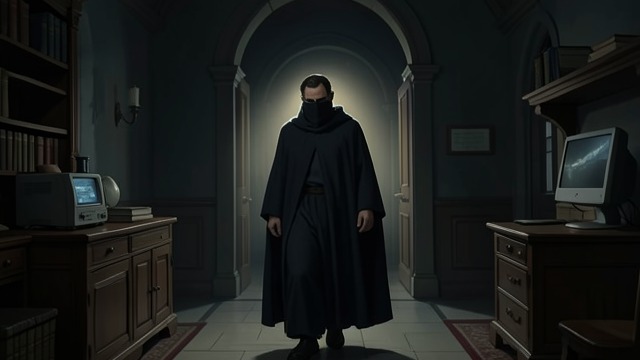
Service Near the Tyrant
Escape from the ruler's reach
The fourth line describes a figure entering the dark land and finding a way out through the ruler's gate. Legge reads it as an officer managing to carry out the judgment appropriate to a dangerous court.
Knowledge must remain alert even when open resistance is impossible.
A remembered loyalist
The fifth line recalls the count of Ji, whom Legge treats as a historical model of firmness under repression. The officer's survival is paired with continued adherence to principle.
The sequence values strategic concealment when direct speech would be fatal.
The Tyrant Descends into Darkness
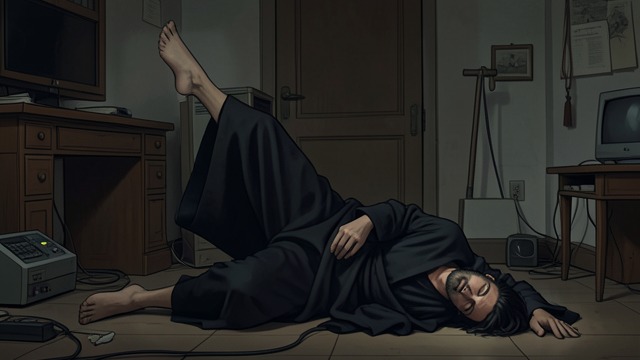
A Ruler's Fall
Power turns against itself
The final line depicts a sovereign who once rose to the sky but is destined to sink into the earth. Legge identifies the image with a ruler who rejects intelligent service.
The figure's downfall is the political consequence of treating counsel as an enemy.
A moral resolution
The officer's restraint contrasts with the ruler's self-destruction. Order cannot be restored by remaining forever in concealment, but the text presents survival as a precondition for eventual change.
The personal story resolves through the exposure of the court's moral failure.
At the opening of Darkening of the Light
At the first line of Darkening of the Light
At the second line of Darkening of the Light
At the fourth and fifth lines of Darkening of the Light
At the final line of Darkening of the Light
